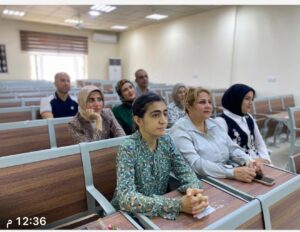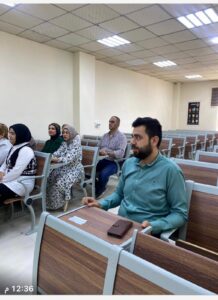
The Department of Community Health Technologies, in cooperation with the University’s Quality Assurance and Performance Division, held a workshop entitled:
(Eradicating poverty in rural areas is crucial for ensuring food security). The workshop was presented by Dr. Laila Abdul Sattar Sadiq.
The workshop addressed the close relationship between eradicating poverty in rural areas and achieving food security. It discussed the causes of rural poverty and its repercussions on food production, availability, and accessibility, as well as the challenges facing rural communities, such as limited job opportunities, weak infrastructure, lack of basic services, and insufficient agricultural financing.
The workshop highlighted:
1- Eradicating poverty in rural areas is fundamental to achieving food security.
2- There is a direct relationship between reducing poverty rates and improving access to food.
3- The importance of cooperation between government agencies, international organizations, and the private sector in combating poverty.
4- Empowering women and youth in rural areas enhances food security and economic development.
The workshop aimed to:
1. Identify the causes of poverty in rural areas and its impact on families and local communities.
2. Discuss the importance of empowering farmers by providing them with access to finance, modern technologies, and markets.
3. Promote the concept of sustainable rural development as a means to eradicate hunger and poverty.
4. Explore proposals and solutions for improving livelihoods in rural areas.
The workshop concluded that:
1. Rural poverty is a major contributor to hunger and malnutrition.
2. Improving the income of rural families positively impacts food security and quality of life.
3. Providing finance, training, and modern technologies enhances the ability of rural communities to address economic and food security challenges.
4. Adopting sustainable development policies contributes to building more productive and stable rural communities.