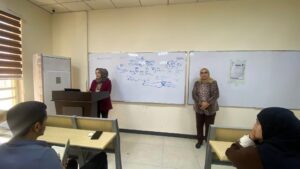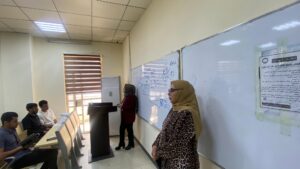
The Medical Technical Institute/Kirkuk organizes an awareness course entitled “Digital Drugs: A New Danger to Youth”
Under the patronage of the President of the Northern Technical University, Professor Dr. Alia Abbas Ali Al-Attar, and the supervision of the Dean of the Medical Technical Institute/Kirkuk, Assistant Professor Dr. Lizan Medhat Mohammed, the Department of Nursing Technologies, in cooperation with the University Psychological Counseling Unit, organized an awareness course entitled “Digital Drugs: A New Danger to Youth.”
The course was presented by:
Assistant Lecturer Sazan Sadiq Karim,
Assistant Lecturer Haza Fadhil Hussein, and
Lecturer Dr. Bushra Nour Al-Din Ghafour, Head of the University Psychological Counseling Unit.
The course covered several topics, including the definition of digital drugs, their nature and mechanism of action, their types and most prominent applications, as well as the psychological and neurological effects resulting from their use. It also addressed the differences between digital drugs and traditional drugs, and the reasons for their spread through the internet and social media. Furthermore, it focused on the role of the family and educational institutions in preventing their use, and methods of treatment and awareness to reduce their risks. The course revealed that digital drugs represent a modern and insidious threat targeting the minds of young people through brain-altering audio effects. It noted that their easy accessibility online has contributed to their rapid spread, particularly among teenagers. The course also highlighted their psychological effects, which can include anxiety, stress, and difficulty concentrating, negatively impacting academic performance and overall behavior. It emphasized the limited public awareness of this type of risk and the need for increased digital literacy education.
The course aimed to raise awareness among young people about the dangers and negative effects of digital drugs, educate parents on monitoring their children’s safe use of technology, and strengthen the role of educational institutions in promoting preventative measures, warning against succumbing to this phenomenon, and providing practical guidance on prevention and treatment. This will contribute to building a conscious generation capable of responsibly navigating digital challenges.