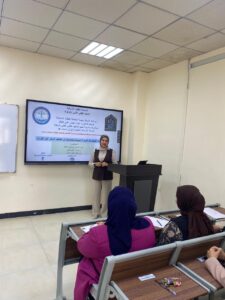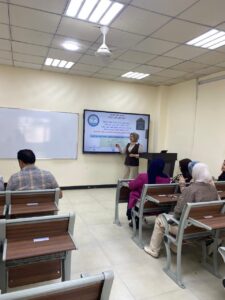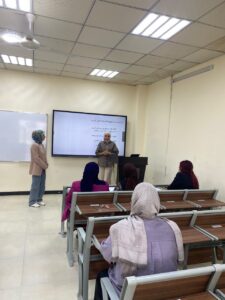
Present at the course:
Assistant Lecturer Hawar Sabah Abdullah
Assistant Lecturer Noor Ali Yahya
Assistant Lecturer Jia Majeed Wahab
This course covered:
This course addressed the use of biomarkers in the early detection of tumors, highlighting their concept, types, and mechanism of action, in addition to their most important clinical applications in the diagnosis and monitoring of cancer patients. The course also included a review of the most prominent biomarkers used, such as CA-125, PSA, CEA, and AFP, and methods for measuring and interpreting their results.
This course aimed to:
* Introduce the concept of biomarkers and their types
* Understand their role in the early detection of tumors
* Identify the most commonly used biomarkers clinically
* Interpret the results of related analyses
* Understand the limitations and accuracy of these tests
This course concluded:
That biomarkers are important tools in the early diagnosis of tumors, as they play a role in improving treatment outcomes and reducing mortality rates. However, they cannot be relied upon in isolation; rather, they must be used in conjunction with other clinical and diagnostic tests to ensure the accuracy of the results.
This course demonstrated:
That using biomarkers requires a thorough understanding of sensitivity and specificity levels, in addition to knowing the factors that may affect the results, such as other medical conditions or physiological factors. It also highlighted the importance of recent developments in this field, such as personalized medicine and the use of advanced analytical technologies.
Recommendations:
* Use biomarkers in conjunction with other tests
* Conduct periodic screenings for at-risk individuals
* Develop laboratories and modern technologies
* Increase medical awareness