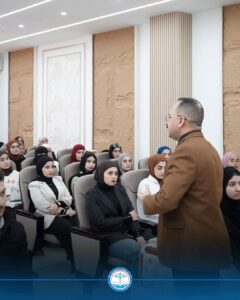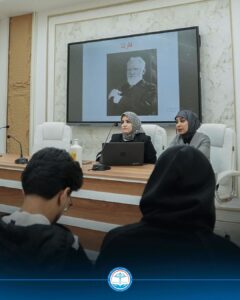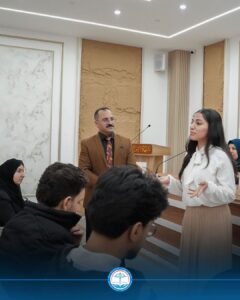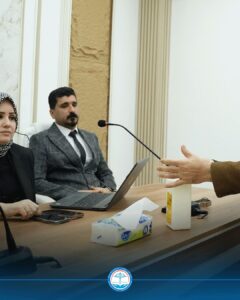
Under the patronage of the President of the Northern Technical University, Professor Dr. Alia Abbas Ali Al-Attar, and the supervision of the Dean of the Kirkuk Medical Technical Institute, Assistant Professor Dr. Lizan Medhat Mohammed, the workshop was organized by the Rehabilitation, Employment, and Follow-up Unit in cooperation with the Community Health Technologies Department and the Kirkuk Health Directorate, specifically the Technical Affairs Department, Laboratories Division. The workshop, entitled “Methods of Preventing the Spread of Antibiotic-Resistant Opportunistic Infections in Operating Rooms,” featured lecturers Dr. Zuhair Assi Hussein and Assistant Professor Dr. Suzan Adel Rashid. The workshop addressed one of the most important issues in healthcare institutions: the spread of infections caused by antibiotic-resistant opportunistic bacteria within operating rooms. The workshop aimed to raise awareness among healthcare and surgical staff about the risks of these infections and to explain best practices based on scientific evidence for their prevention, thereby contributing to improving the quality of healthcare and reducing post-operative complication rates. Workshop Topics
1. Introduction to Opportunistic Resistance
What are opportunistic bacteria?
Reasons for their resistance to antibiotics and how they develop.
Examples of Common Bacteria in the Operating Room
MRSA
Pseudomonas aeruginosa
Acinetobacter baumannii
Enterobacter spp.
2. Transmission of Infections in Operating Rooms
Contamination via surgical instruments.
Transmission through the air or contaminated surfaces.
Transmission via the hands of medical staff.
Surgical wound infection (SSI).
3. Strategies for Preventing the Spread of Infection
First: Sterilization and Disinfection
Standard sterilization steps for surgical instruments.
Use of disinfectants effective against resistant bacteria.
Monitoring the quality of sterilization equipment (autoclaves).
Second: Adherence to Handwashing Procedures
When and how to wash hands?
The importance of alcohol-based sanitizers.
The role of individual adherence in significantly reducing infection rates.
Third: Operating Room Environment Control
Positive air pressure.
Hepa filters.
Regular changing of surgical gowns.
Minimizing movement within the operating room.
Fourth: Triage and Isolation Mechanisms
Isolation of cases causing resistant infections.
Protocol for transporting patients to and from the operating room.
Fifth: Antibiotic Stewardship
Preventing the indiscriminate use of antibiotics before and after surgery.
Establishing appropriate surgical prophylaxis protocols.
4. Documentation and Reporting of Infections
How to record surgically acquired infections.
The importance of tracking resistant bacteria in the hospital.
The role of the infection control committee.
5. Staff Training and Performance Evaluation
Simulating clean operating procedures.
Evaluating adherence to protocols.
Conducting periodic refresher courses.