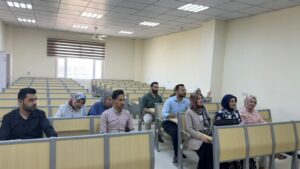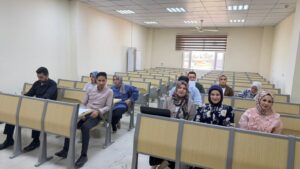
Under the patronage of the President of the Northern Technical University, Professor Dr. Alia Abbas Ali Al-Attar, and under the direct supervision of the Dean of the Kirkuk Medical Technical Institute, Assistant Professor Dr. Lizan Medhat Mohammed, the Department of Pharmacy Technologies at the Kirkuk Medical Technical Institute, in cooperation with the University’s Quality Assurance and Performance Division, organized a scientific seminar entitled:
(Sustainable Development from the Perspective of Islamic Economics).
The seminar was presented by Assistant Professor Dr. Jamal Fateh Ali, who addressed the concept of sustainable development in Islam. In Islamic thought, humankind is considered God’s vicegerent on Earth, which means that humans must invest resources wisely and avoid waste or extravagance. This is linked to the principle of justice and balance between economic needs and social values.
The seminar also reviewed the most important principles of sustainable development in Islamic economics. Social justice in Islam emphasizes the equitable distribution of wealth. Tools such as Zakat (obligatory almsgiving), Sadaqah (voluntary charity), and Waqf (endowment) help reduce poverty and achieve social solidarity. The symposium aimed to enhance scientific understanding of the biochemistry of diseases and to clarify the relationship between the environment and human health. It also sought to raise awareness of the importance of biomarkers and antioxidants in disease prevention, thus supporting the drive towards a healthy environment and a sustainable future.
In conclusion, the symposium emphasized that sustainable development in the Islamic economy is based on a balance between this world and the hereafter, between humanity and the environment, and between the individual and society. It represents a comprehensive vision aimed at building a just and stable society without compromising the future.